


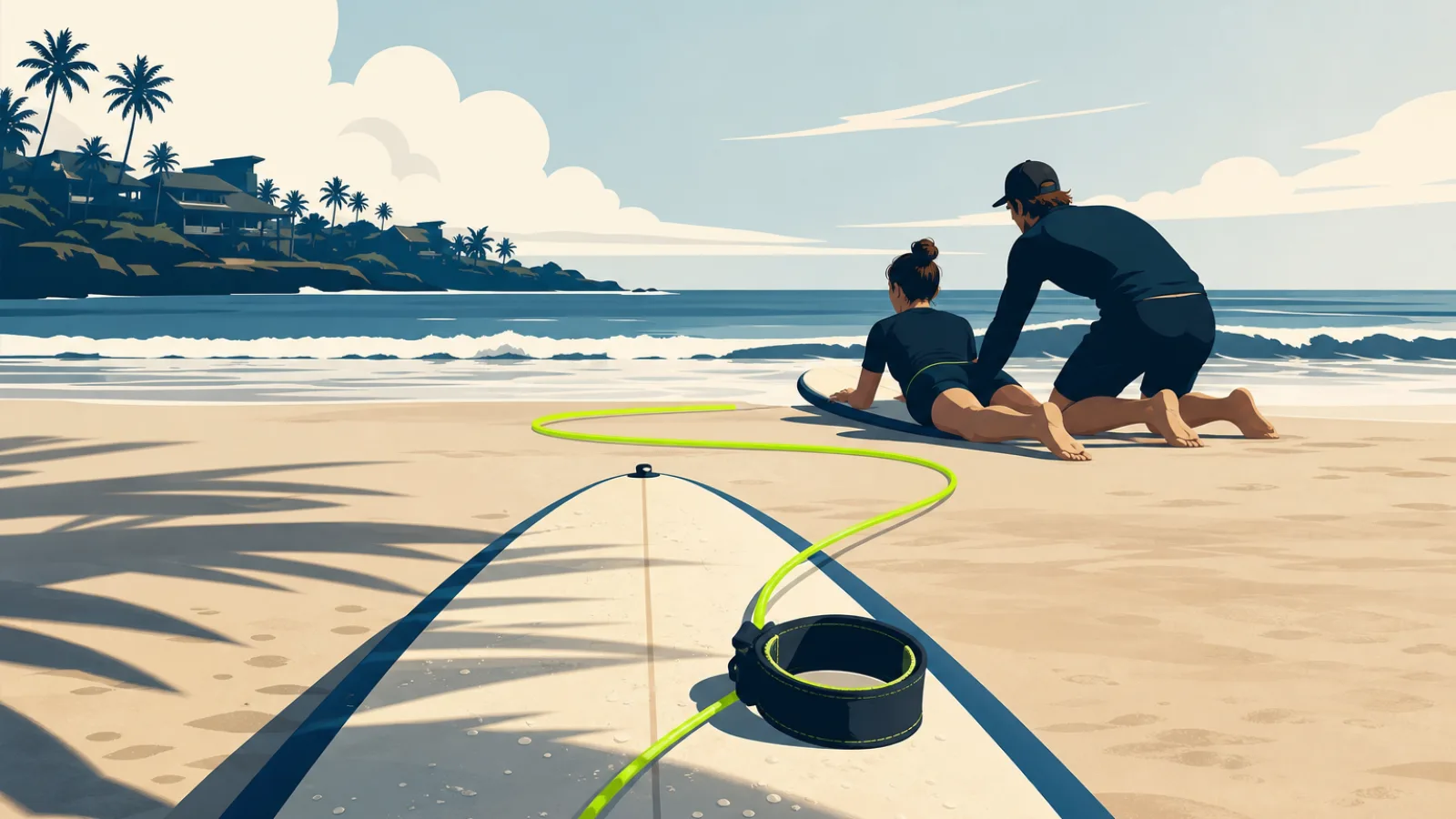
Direct answer: Absolute beginners should book a supervised surf lesson in Canggu rather than renting a board and trying to learn alone. Canggu can be suitable for first lessons on the right day, but crowds, currents, tide changes, swell size, other learners and sections with rocks or reef can make it unsafe or frustrating without close guidance.
A good beginner lesson is less about choosing the most famous beach name and more about matching the day’s conditions to your swimming ability, confidence and experience. Before you pay, ask where the lesson will happen, why that spot is suitable today, what is included, and how many students will be in the water with each instructor.
Is Canggu a good place to learn surfing?
Canggu can work for beginner surf lessons when the waves are small enough, the tide is appropriate, the crowd is manageable and the instructor chooses a suitable part of the beach. It is not automatically beginner-friendly every day. Wind, swell size, currents and crowding can change quickly, so a fixed beach name should never be treated as a safety guarantee.
The main advantage is convenience for visitors staying in or near Canggu. The main challenge is popularity. A nervous first-timer who cannot yet control a board needs space, clear instructions and close supervision, not just a soft-top rental in a busy lineup.
If the waves look too large, fast, crowded or chaotic, a responsible instructor should suggest a different time, a different suitable area, or postponing. Children, weak swimmers, nervous swimmers and anyone who panics in moving water should be especially cautious and may need a private lesson or a gentler location if Canggu is not suitable that day.
Beginner perspective on Canggu surf spots
The beach names below are useful for orientation, but conditions and access should always be confirmed locally before the lesson. Ask your instructor where they plan to teach on the day and why that area is appropriate for your level.
Batu Bolong
Batu Bolong is one of the names beginners often hear when researching surf lessons in Canggu. From a learner’s perspective, its appeal is the possibility of softer, longer rides on suitable days. The main caution is crowding and mixed ability levels. If your lesson is here, ask whether you will start in whitewater or gentle green waves, where you should wait, and how the instructor will keep you away from busier takeoff areas.
Old Man’s area
The Old Man’s area is also commonly discussed in relation to mellow, longboard-style practice. It can make sense for beginners only when the instructor confirms the tide, wave size and crowd level are appropriate. Even a mellow wave becomes stressful if too many surfers, surf schools and board rentals are sharing the same space. Ask whether the lesson will stay in a quieter inside section or move farther out.
Berawa
Berawa should be treated as more condition-dependent for a first lesson. It may feel faster, stronger or less predictable than classic learner zones, depending on the day. Absolute beginners should not assume it is suitable without a clear explanation from the instructor. If Berawa is suggested, ask whether conditions are small, where you will enter and exit, and whether you will stay in controlled whitewater.
Echo Beach
Echo Beach is not a default choice for a first surf session. It may involve more powerful conditions or hazards that beginners need explained clearly, including rocks, reef, current and crowd positioning. On a very small and controlled day, an instructor may judge a specific area appropriate, but first-timers should ask direct safety questions before entering the water.
In short, the best Canggu surf spot for beginners is the one that is suitable on the day. A good coach should explain the choice in simple terms: tide, swell size, wind, crowd, hazards and your ability.
Private, semi-private or group surf lesson?
The right format depends on your budget, confidence in the ocean and how much personal feedback you need. For a first surf lesson, supervision matters more than the social atmosphere.
- Private lesson: Best for absolute beginners, nervous swimmers, children, people with previous injuries, or anyone who wants close correction. You should receive more attention on board handling, paddling, pop-up technique, positioning and wave choice.
- Semi-private lesson: Good for couples or friends with similar ability and confidence. It keeps the session social while usually allowing more individual guidance than a larger group. Avoid pairing a confident learner with a nervous first-timer if it means one person gets the wrong level of coaching.
- Group lesson: Often the most budget-friendly format and can be enjoyable if the group is small and well managed. It is less suitable if you need constant help getting into position, managing fear, or controlling the board around other surfers.
When comparing beginner surf lessons in Canggu, ask how many students are assigned to each instructor in the water, not just how many people are in the overall class. For children and weak swimmers, closer supervision is usually worth prioritising.
What affects surf lesson prices in Canggu?
Exact surf lesson prices in Canggu should be checked directly before booking. Avoid relying on old blog posts, screenshots or casual estimates, because packages can change by provider, date, format and inclusions.
The main price factors usually include:
- Lesson format: Private lessons generally cost more than group lessons because the instructor’s attention is not split as widely.
- Session length: Some advertised durations include beach theory, warm-up and debriefing, while others focus mainly on water time.
- Equipment: Board rental, leash and rash vest may be included or charged separately. Ask what type of beginner board you will use and whether it is in suitable condition.
- Instructor experience: Coaches may charge differently depending on experience, local knowledge, language skills and teaching style.
- Transfers: Pickup or drop-off from accommodation may be included, optional or unavailable.
- Photos or video: Some providers may offer photos, clips or video feedback as an extra or package feature.
- Included extras: Ask about water, storage for belongings, insurance, rescheduling terms and any other item that matters to you.
The cheapest lesson is not always the best value if communication is unclear, the student group is too large, the equipment is poor or the instructor does not stay close enough in the water. Ask for the total price before paying, including any extras you want.
What to expect in your first surf lesson
A beginner surf lesson should start on the beach, not straight in the lineup. You should receive a simple explanation of the board, leash, safe carrying, wave direction, how to lie on the board, how to paddle and how to stand up. The safety briefing should cover how to fall, how to protect your head, how to manage the board, and how to avoid colliding with other surfers.
After a warm-up and pop-up practice on the sand, many first-timers begin in whitewater or very gentle green waves if conditions and ability allow. The instructor may push you into waves at first, then gradually ask you to paddle more yourself. The goal is not advanced turning. The first goal is control, confidence, safe positioning and understanding how the ocean moves.
Bring secure swimwear, water-resistant sunscreen, water, a towel and a change of clothes. Avoid loose jewellery or anything that could catch on the board or leash. Leave valuables at your accommodation or ask how belongings are stored during the lesson.
How to choose a surf instructor in Canggu
A good beginner instructor should ask questions before the lesson, not only after payment. Expect them to check your swimming ability, previous surf experience, injuries, fitness, fear level and comfort in moving water. If they do not ask, volunteer the information.
Look for clear communication and active water supervision. The instructor should explain where you will wait, when to paddle, when to stand, how to return safely and where not to go. For beginners, patient coaching and local condition knowledge are more important than surfing ability alone.
Before paying, ask these practical questions:
- Where will the lesson happen today, and why is that spot suitable for my level?
- What tide, swell and crowd conditions are you planning around?
- How many students will be with one instructor in the water?
- Is the lesson private, semi-private or group?
- What is the total lesson duration, including beach theory and water time?
- Are board rental, leash, rash vest and any safety equipment included?
- What type and size of board will I use as a beginner?
- What happens if the waves are too big, the current is strong or the beach is too crowded?
- Can the lesson be rescheduled or refunded if conditions are unsafe?
- Are pickup, photos, video analysis or insurance included, or are they extra?
- Are there any local rules, access issues, warning signs or beach conditions I should know about today?
If the answers are vague, rushed or dismissive, keep looking. A beginner surf lesson should feel organised before you enter the water.
Safety tips before booking a Canggu surf lesson
Do not surf alone as a first-timer in Canggu. Crowds, current, tide changes and other learners make board control and positioning important from the first minute. A soft-top board is still large enough to injure you or someone else if you lose control.
- Be honest about swimming ability. You do not need to be an elite swimmer for every beginner lesson, but you must tell the instructor if you are weak, anxious or uncomfortable in deeper water. If you cannot swim unassisted, ask whether surfing in open water is appropriate at all.
- Postpone if it feels wrong. If the waves look too large, fast or chaotic, it is acceptable to delay the session. A responsible instructor should support a safety-first decision.
- Check hazards. Ask about rocks, reef, currents, local warnings, entry points and exit points. Do not assume lifeguards, flags or warning systems are present or active unless confirmed locally on the day.
- Respect etiquette. Do not drop in on other surfers, do not paddle through the busiest takeoff area, and listen when your instructor tells you where to wait.
- Control the board. Keep hold of it when safe, protect your head when falling, and avoid throwing the board away in a crowd. If you must release it for safety, check behind you first when possible.
- Know your limits. Fatigue increases mistakes. Tell the instructor if you are tired, dizzy, cold, frightened or losing confidence.
If you are ready to compare coaches, you can browse options for a surf instructor in Canggu through Skilty’s Canggu surfing page, then confirm the day’s conditions, inclusions, price and lesson format directly before booking.
FAQ
How many surf lessons do I need before I can stand up?
Some beginners stand during the first session, especially in whitewater with a suitable board and close instruction. Others need several lessons to feel balanced and relaxed. Progress depends on fitness, swimming comfort, coordination, wave conditions and the quality of feedback.
Can I learn to surf in Canggu if I am not a strong swimmer?
Tell the instructor honestly before booking. Some nervous or weaker swimmers may manage a very controlled shallow-water lesson in small conditions, but Canggu is not a place to hide poor swimming ability. Consider a private lesson, postpone in bigger surf, or choose a gentler location if advised.
Is it better to book a Canggu surf lesson in advance or at the beach?
Booking in advance gives you time to compare instructors, ask about group size and confirm inclusions. Booking at the beach can be flexible, but you still need to ask the same safety, price and rescheduling questions before paying. Either way, the lesson should be based on the day’s conditions.
What should I wear for a beginner surf lesson in Bali?
Wear secure swimwear that will stay in place when you fall. A rash vest is useful for sun protection and board rash, and may be included in some lessons. Use water-resistant sunscreen and avoid loose jewellery or anything that can catch on the board or leash.
Are Canggu surf lessons suitable for children?
They can be, but children need closer supervision, small conditions and an instructor experienced with young beginners. Ask about minimum age, instructor-to-child ratio, board size, water depth and what happens if the child becomes tired or scared.
What happens if the waves are too big on the day of my lesson?
A good instructor should suggest rescheduling, moving to a more suitable spot, or adjusting the session to safer conditions. Confirm the cancellation or rescheduling policy before you pay, and do not enter the water if conditions feel beyond your comfort level.